
Experience Alone Does Not Equal Skill or Knowledge — Part 1
- Liam Musiak
- Aug 20, 2025
- 4 min read
“Experience” is one of the most overused words in martial arts. Too often, decades on the mat are assumed to mean superior skill and deeper knowledge. But that isn’t always true. Time alone does not create skill or knowledge — only dedication, testing, and evolution do.
⸻
Monkey See, Monkey Do Isn’t Experience
Copying a teacher without questioning, adapting, or innovating is not true learning. It doesn’t build real skill, and it doesn’t expand knowledge. That is simply following the leader.
Outdated methods that may have worked in the past are not always effective today. Our understanding of body mechanics, biomechanics, psychology, and the law has advanced. Violence has changed, and so has society. If training hasn’t evolved, then decades of practice produce repetition — not mastery.
⸻
Why Most Karateka Today Couldn’t Fight
The reality is that most karateka today couldn’t survive, let alone succeed, in a fight or even a hard sparring session against someone from a more modern combat sport or martial art. The reason is simple: too many still train exactly as karateka did a century ago in Okinawa, with little to no adaptation.
When karate first emerged in Okinawa, it was a response to real-world violence and constant threat. The early masters adapted what they learned from Chinese arts, indigenous fighting methods, and Japanese influence. They evolved constantly. If those same masters saw that karate had remained frozen for over 100 years, many would be sick to their stomachs. They themselves were innovators, not preservers of dead methods.
So when modern karateka say “we do it to preserve the art,” they misunderstand what preservation really means. True preservation is keeping the spirit of growth and adaptation alive — not holding the art back by refusing to evolve.
⸻
The Phone Analogy
A phone from the 1970s has been around far longer than a modern smartphone. But no one would claim it has more skill or knowledge built into it. The modern phone is better because it has been refined, upgraded, and tested for today’s needs.
Martial arts are no different. Longevity is only valuable if it brings growth in skill and knowledge.
⸻
Decades vs. Extremely Rare Outliers
For the vast majority, it takes decades of training to develop true mastery. Time provides the space to refine, to test, and to grow. On average, time = experience = better is correct.
But every so often, an outlier appears. Someone who can compress decades’ worth of skill and knowledge into only a few years. They are not common — perhaps one in ten million at best.
And here’s the truth: they are not outliers because of luck. They are outliers because they work harder than anyone else. They train harder than people their own age, harder than those with decades more experience, and harder than anyone else in their field. The outlier’s defining trait is relentless commitment — working harder, longer, and with more determination than anyone else.
⸻
Moses Itauma: A Living Example
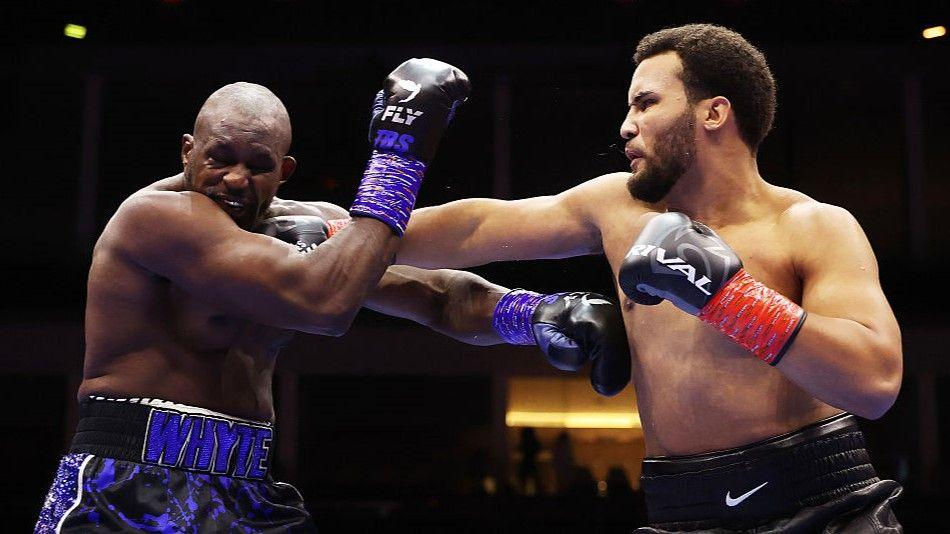
Take Moses Itauma. At just 20 years old, he has already entered the top leagues of professional boxing. In fact, he famously knocked out seasoned heavyweight Dillian Whyte — a man with far more years, experience, and world-class fights under his belt — in the very first round.
Now compare Moses to others his age. Most 20-year-old boxers are still amateurs, still building their foundation, learning the ropes, and taking part in small shows to gain experience. Even highly talented prospects at 20 are usually several years away from challenging ranked professionals. Moses, however, is already fighting — and beating — world-level names.
Even when compared to fighters five or ten years older, in their mid-to-late twenties, Moses stands out. Many heavyweights don’t even hit their prime until their thirties, yet Moses is already performing at a level that puts him on track to compete with the very best.
Whyte had the time and the experience, yet Moses’ extreme dedication, commitment, and relentless work ethic allowed him to achieve what others take decades to build. His training is harder, sharper, and more focused than that of his peers. He has squeezed decades of progress into a few short years because he works harder than anyone else.
Moses is the living definition of an outlier. He represents that one in ten million case where raw commitment and innovation elevate someone into a league far above both their peers and many of their seniors.
⸻
Experience That Matters
True experience isn’t about how long you’ve worn a gi or how many years you’ve been around. It’s about:
Building skill through live testing, not just drills.
Developing knowledge of biomechanics, psychology, and law.
Adapting to modern violence and the world as it is today.
Constant innovation instead of blind repetition.
⸻
Final Word
Yes — experience matters. For 99.9999% of people, decades are the path. But for the extremely rare one in ten million outliers, decades of skill and knowledge are compressed into years — not through shortcuts, but through unmatched dedication, commitment, and work ethic that surpasses everyone else.
And for everyone — karateka, judoka, boxers, or MMA fighters — the lesson is the same: experience only matters when it evolves into real skill and real knowledge. To repeat the past without evolving dishonours the very masters who built the arts in the first place.
Comments